Introduction
Welcome to Trezor.io/Start, the official onboarding portal for Trezor devices. Setting up your hardware wallet is the first step toward taking full control of your cryptocurrency securely. In today’s digital economy, owning crypto without securing it properly is risky. That’s where Trezor comes in. By combining offline key storage with an easy-to-use setup process, Trezor ensures that your assets remain safe from hackers, phishing attempts, and malware.
This guide will walk you through everything you need to know about starting your Trezor device — from unboxing and connecting it for the first time to creating your recovery seed, installing Trezor Suite, and making your very first transaction. With over 2000 words of detailed instructions, tips, and explanations, you’ll be fully equipped to manage your crypto like a pro.
Unboxing and First Steps
When you receive your Trezor package, it’s important to verify its authenticity. Each Trezor box is sealed with tamper-evident holographic tape. If the seal is broken, damaged, or appears to have been replaced, do not use the device. Instead, contact Trezor support immediately.
Inside the box, you’ll find your Trezor hardware wallet, a USB cable, recovery seed cards, and user documentation. Once you have everything laid out, connect your device to your computer using the USB cable.
Installing Trezor Suite
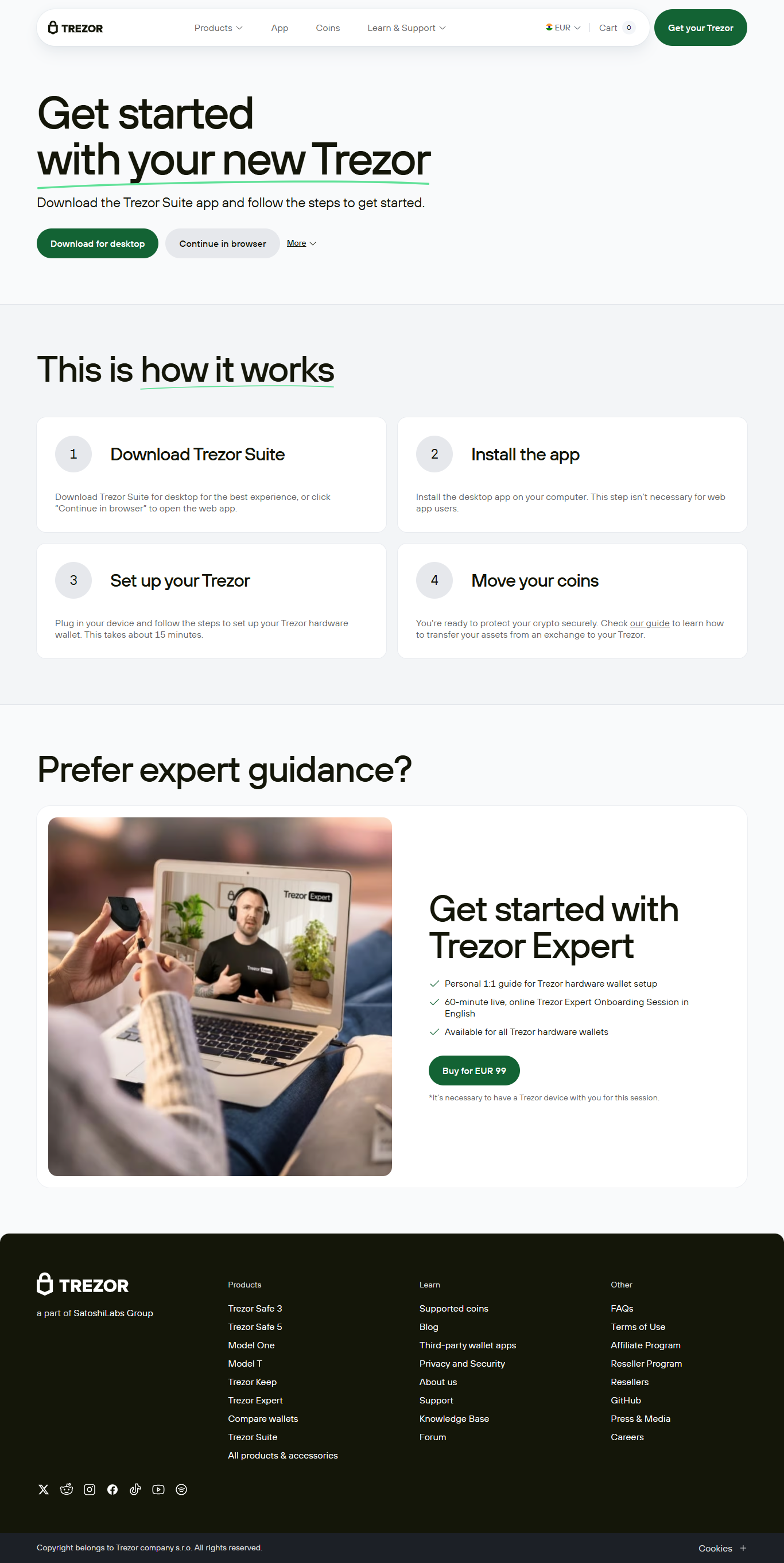
The next step is to install Trezor Suite, the official desktop application that lets you manage your device, update firmware, and handle cryptocurrencies. Head over to trezor.io/start and download the latest version of Trezor Suite for your operating system (Windows, macOS, or Linux).
Once installed, open Trezor Suite. The application will detect your hardware wallet and guide you through initialization. This process includes updating the firmware (if necessary) and setting up a PIN for your device.
Creating Your Recovery Seed
One of the most crucial steps in setting up your Trezor device is generating a recovery seed. This seed phrase, typically 12 to 24 words long, acts as the master key to your wallet. If your device is lost, stolen, or damaged, you can use the recovery seed to restore access to your funds on another Trezor or compatible wallet.
- Write down the seed words exactly as they appear on the device screen.
- Never take a photo, screenshot, or store the seed online.
- Keep the written copy in a safe and secure location.
- Do not share the recovery seed with anyone.
Setting Up Your PIN
Your Trezor device will prompt you to set a PIN. This adds an extra layer of protection against unauthorized access. Even if your device falls into the wrong hands, the PIN prevents attackers from immediately using it. Choose a PIN that is not obvious (avoid sequences like 1234 or 0000).
Trezor devices employ a randomized PIN entry system, displayed on the device screen, which makes it extremely difficult for keyloggers to capture your code.
Making Your First Transaction
Once your device is initialized, you’re ready to make your first cryptocurrency transaction. In Trezor Suite, select the asset you want to send or receive. For receiving, you’ll generate a receiving address which will appear both on your device and in the app. Always confirm the address on the Trezor device itself to avoid phishing or malware attacks.
For sending funds, input the recipient’s address, amount, and transaction fee. Confirm the details on the Trezor hardware screen before approving. The transaction will then be broadcast to the blockchain.
Advanced Features
Coin Control
Advanced users can take advantage of coin control features within Trezor Suite, which allow you to manage unspent transaction outputs (UTXOs) for better privacy and fee optimization.
Exchange Integration
Trezor Suite integrates with third-party exchanges, allowing you to swap cryptocurrencies without leaving the app. This provides convenience while maintaining the security of hardware wallet protection.
Firmware Updates
Regular firmware updates ensure your device stays protected against vulnerabilities. Trezor Suite notifies you when updates are available, and the process is simple and guided.
Best Practices for Security
- Always verify addresses on your Trezor screen before confirming.
- Enable passphrase protection for an additional layer of security.
- Never share your recovery seed or enter it into a computer.
- Update firmware regularly to stay ahead of security threats.
- Keep backups of your seed phrase in multiple secure locations.
Conclusion
Setting up your Trezor device through Trezor.io/Start is a straightforward process that provides peace of mind in a volatile digital world. By carefully following the steps outlined in this guide—verifying your device, installing Trezor Suite, creating your recovery seed, setting a strong PIN, and making your first transaction—you’re ensuring that your cryptocurrencies remain safe and under your control.
Trezor isn’t just a wallet; it’s a complete security ecosystem that protects you against theft, scams, and digital vulnerabilities. With continuous updates, a strong focus on privacy, and user-friendly design, Trezor remains one of the most trusted names in the crypto security space. Your journey toward safe crypto ownership begins here.